A month ago I updated you on the sales and price results for the summer of 2026. That post included a link to an article from the Austin American-Statesman, succinctly summarized here:
“Central Texas’ once-sizzling housing market cooled further in August, with home sales and prices both down from a year earlier as high borrowing costs and continued economic uncertainty kept would-be buyers cautious …. Home sales across the Austin-Round Rock-San Marcos metropolitan area slid 7.3% from August 2025, with 2,501 homes sold compared with about 2,700 a year earlier, according to the latest data from Unlock MLS. The median sales price fell 6.4% to $412,000, down from about $440,000 last August.“
Compared to previous market cycles, that’s not a typical summary for the traditional “selling season” for residential real estate. Now, using the latest data from the Texas Real Estate Research Center at Texas A&M, I can summarize market activity through the entire 3rd quarter.
This chart shows listings and sales from 2012 through September 2026:
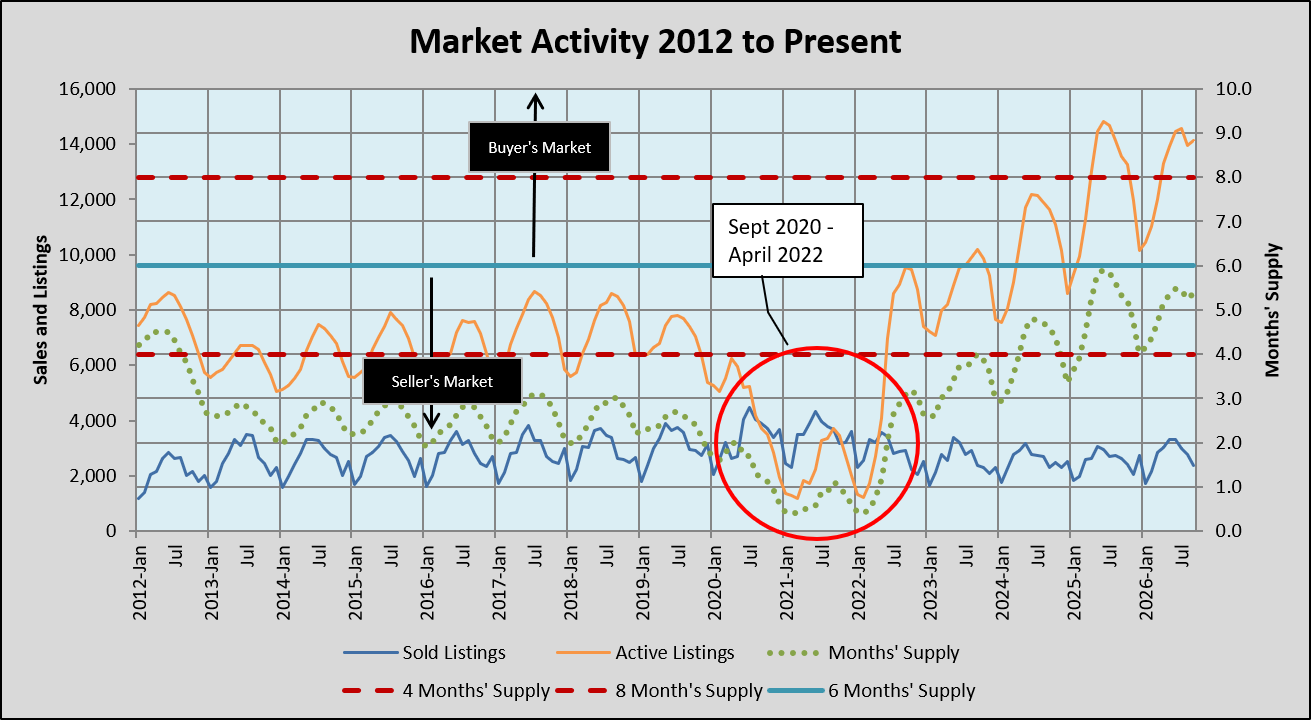
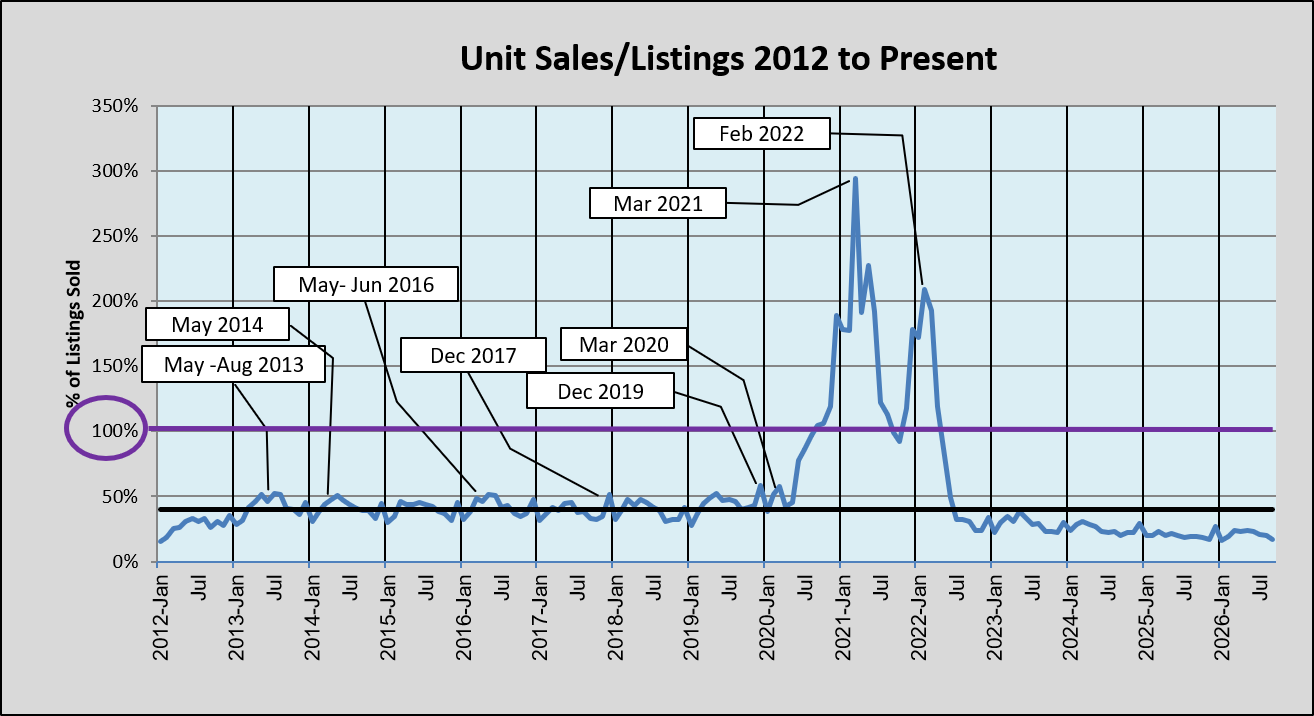
In case you haven’t seen my market dashboard before, I’ll explain that the orange line shows the number of active listings each month, and the blue graph line shows the number of closed sales in each month. The green dotted line is the ratio of listings-to-sales — i.e., how many months the listing inventory would last at the then-current pace of sales. Before the last market cycle we considered 6 months of inventory (straight horizontal blue line) to be “normal” or “balanced.” Obviously, that assumption does not describe our experience over the past 15 years, with inventory reaching that level just once during that time, and falling to just 2 weeks’ supply in 2021 and 2022! Notice that sales actually exceeded the number of listings for most of two years in 2020 through 2022.
Since then, sales have struggled, trending downward since early 2023, even as listing inventory soared:
Sale prices have also been challenged since 2022:
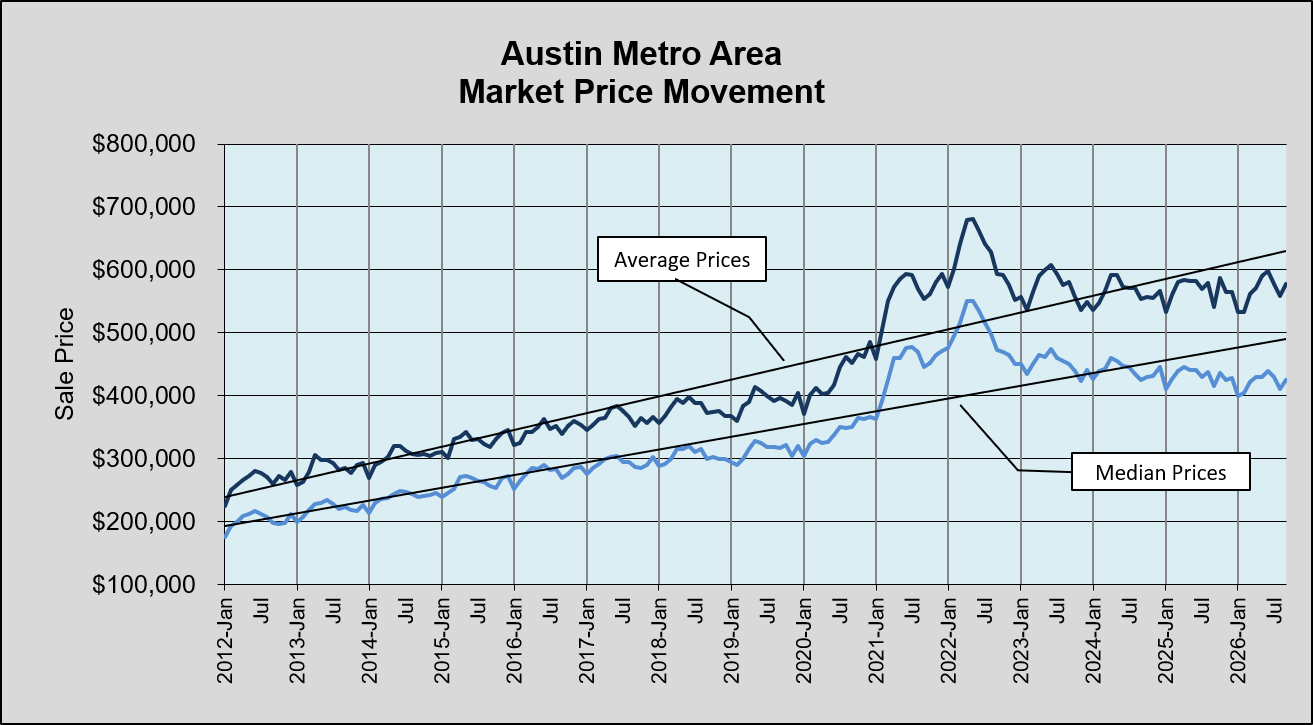
We saw an uptick in both average and median prices in September 2026, but they were still slightly below their July levels and still lower than the highest point in 2023. Given the broader economic environment in the United States now and election-year uncertainties, it is impossible to make confident predictions for the fourth quarter at this time, but I will keep you updated. Please stay tuned ….


Discussion
No comments yet.